Focused vs Radial Shockwave: What's the Difference?
Shockwave therapy has become one of the most effective non-surgical treatments for chronic tendon pain, heel pain, muscle injuries and bone healing. At Functional Foot & Ankle, we are proud to offer both EMS DolorClast® Focused Shockwave and Radial Shockwave Therapy, allowing us to tailor treatment to your specific injury.
Although both technologies use acoustic energy to stimulate the body's natural healing processes, they work in different ways and each has its own advantages.
EMS DolorClast® Focused Shockwave
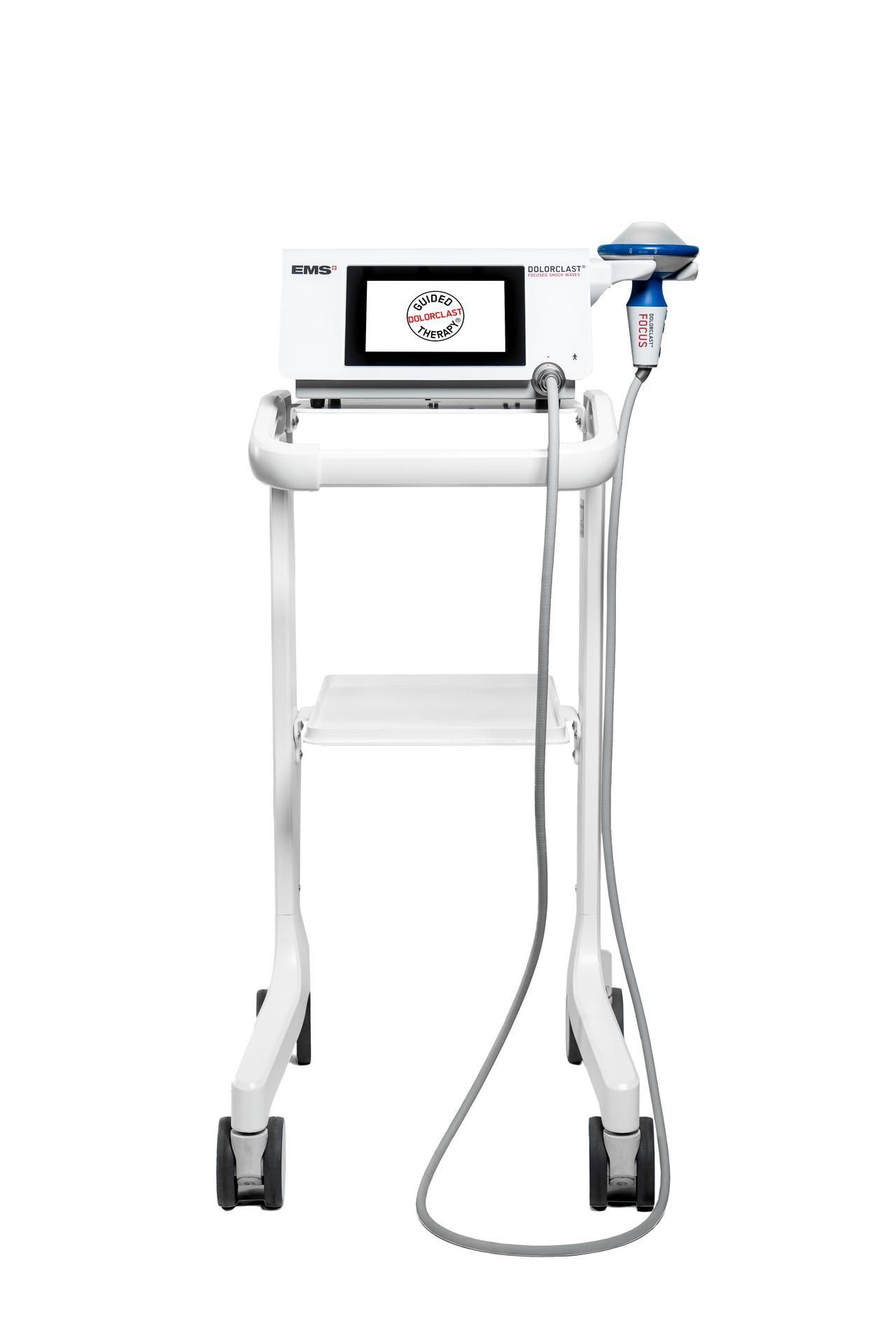
Focused shockwave is the latest generation of shockwave technology. It concentrates energy at a precise depth beneath the skin, allowing treatment of deep tissues without delivering the highest energy at the skin surface.
This means the treatment can target injured tendons, bone, joints and other deep structures more accurately while often being more comfortable than patients expect.
Focused shockwave is commonly used for:
- Plantar fasciitis and chronic heel pain
- Achilles tendinopathy and partial tendon tears
- Tibialis posterior tendinopathy
- Peroneal tendinopathy
- Patellar tendinopathy (jumper's knee)
- Hamstring tendinopathy
- Gluteal tendinopathy
- Chronic ligament injuries
- Muscle injuries and chronic soft tissue pain
- Shin splints (MTSS)
- Delayed union and non-union fractures
- Chronic wounds and difficult-to-heal wounds
- Scar tissue and post-surgical tissue healing
- Osteoarthritis and chronic joint pain
Radial Shockwave

Radial shockwave has been successfully used for many years to treat musculoskeletal pain. Instead of focusing energy at a specific depth, it delivers pressure waves that spread out from the applicator, making it ideal for treating larger, more superficial tissues.
Radial shockwave is particularly effective for:
- Muscle tightness
- Trigger points
- Calf injuries
- Plantar fasciopathy
- Early tendon injuries
- General soft tissue pain
Which One Is Better?
The answer depends on your injury.
If the injured tissue is deeper, long-standing, or involves bone healing, EMS DolorClast® Focused Shockwave often provides greater precision and allows us to deliver therapeutic energy exactly where it is needed.
For more superficial muscles, fascia and tendons, Radial Shockwave Therapy remains an excellent treatment and continues to deliver outstanding clinical results.
In many cases, the two technologies can even be combined to maximise healing—using radial shockwave to prepare surrounding tissues and focused shockwave to treat the deeper source of pain.
Why We Chose EMS DolorClast®
At Functional Foot & Ankle, we've invested in the EMS DolorClast® Focus because it represents one of the world's leading shockwave systems. Its advanced focused technology allows us to treat a broader range of conditions, including difficult chronic tendon injuries, bone healing, and wound management, while providing highly targeted treatment with minimal downtime.
Every patient undergoes a comprehensive assessment before treatment, ensuring we select the most appropriate technology for your injury and combine it with rehabilitation, strength testing, load management and movement analysis to achieve the best possible long-term outcome.
Our goal isn't just to reduce pain — it's to help your body heal, restore function, and get you back to work, exercise and sport as quickly and safely as possible.